#MuslimLivesMatter

“I’m scared, Chaplain Amy.”

I couldn’t breathe for a moment as I looked at the beautiful (both inside and out) college woman before me. On Tuesday evening, three young Muslims in Chapel Hill were brutally murdered at their home. Our campus is only about an hour away from Chapel Hill, and many of our students have friends at our state’s flagship university. Our Muslim students are no exception – several of them have relatives at Carolina who knew these vibrant young adults whose lives ended so tragically. As I asked my Muslim students how they were doing, the response was the same – they’re scared.

I wanted to reassure them so very badly. I wanted to tell them that this would never happen to them. I wanted to let them know that no one would ever single them out for their faith. I wanted to tell them they would be safe. But I make it a point not to lie to my students – these wonderful women who will be the leaders of our communities and who will change the world for the better. They have all been instructed by their families for years about what to do and what not to do as Muslim women in our society so that they could be safe. They know the “rules” about how to avoid conflict or dangerous situations in a culture where most people can only associate being a Muslim with being a terrorist. But when students who have done all the right things are shot execution style in their own home, how can my students ever feel safe? How can they live without fear? What does this truly say about our society?

I’m a lifelong North Carolinian. Sometimes I’m proud of that, and sometimes I feel like I need to apologize. As the entire world discusses my home state, I know that this is where Rev. Franklin Graham also lives – a man who continually has labeled Islam as an evil religion and spouts “facts” about Islam which are completely false. I know that far too many people in my state (and in my country) do not know the basics of Islam – do not know that it is an Abrahamic faith with the same roots as Christianity and Judaism – do not know that the Christian Bible has far, far more texts about the use of violence than the Qu’ran.

Anti-Muslim hate crimes are five times more likely to happen now than before 9/11. I also remember talking to students on that day and in the days after – trying to reassure them when they felt unsafe and were scared. I remember all of us thinking about the good that could come out of that terrible event – that we could find ways to live in community and truly respect others, no matter how different we might all be.

No one will ever truly know why this man committed these terrible murders. People will blame it on mental illness or a parking issue or some other excuse. People will ignore the ways he acted towards these obviously Muslim young people and his comments on social media. But the fact remains that we live in a society where a Muslim individual can never feel truly safe. We live in a society where Muslim children are taught from an early age how to be careful of people who are ignorant about their faith or who willfully misunderstand and mischaracterize it. We live in a society where people, including people with power like Rupert Murdoch, choose to demonize an entire religion and all its adherents.

Muslim Lives Matter. All lives matter. The spark of the Divine is in each and every individual we will ever meet. As a society, we need to step away from the fear, the hate speech, the deepening of dividing lines. When we lessen the value of another, we are downgrading our own value. All lives matter. Let us act like it, and let us speak out when others ignore this basic facet of what it means to be in a just society.

Defending One’s Faith

interfaith 6I am a minister. I am called to live as a minister, but I am also a teacher. As a college chaplain, I work with people through crises, plan worship services, support a variety of spiritual life activities and also teach religion courses each semester. Yes, I am a busy person. And I love my job.

When teaching about religion, each semester one phrase comes out of my mouth on multiple occasions. “Every religion has a great deal of diversity.” I tend to focus on women’s studies and religion, and we explore how different religions treat women and allow them to function within that particular faith. It is impossible to say that any particular religion has one attitude towards women. It depends on culture, geographical location, age, race, social status, and so many other things. Just ask any Buddhist feminist. People assume that Buddhism is all about peace and equality, but there are Buddhist women in some parts of the world who have not found that to be case. Does that mean that all Buddhists are patriarchal misogynists? Certainly not.

I have been called on to defend my faith on occasion. “How can you be part of a religion that thinks God is a man?” I always respond that even though there are some sects of Christianity who believe this, the majority of Christians believe God is above gender. “How can you be part of a religion that has oppressed people throughout the centuries?” Yes, there are some awful things that have been done in the name of Christianity (the Crusades and genocide of Native Americans come to mind immediately), but there are many Christians who do not believe their faith is inherently violent or encourages violence. “Blessed are the peacemakers, for they will be called children of God” is one of my favorite phrases (Matthew 5:9).

Despite these occasions, I live in a country where the majority of individuals are Christians, and “defending one’s faith” is not a commonplace occurrence for me. Most people understand my job and role in life, and fortunately for me, most people tend to think well of ministers (despite some high profile cases that could make one think otherwise). I wish people of other faiths were given the same benefit of a doubt. I have worked with the Interfaith community for many years, especially since 9/11. Since that time, I have witnessed countless Muslims defend their faith. This issue has increased in recent weeks, with the rise of ISIS, an organization which obviously does not understand the fundamentals of Islam. How many times do Islamic scholars and leaders have to speak out to ears that refuse to listen? How many times do they have to defend their faith?

One of the things I like best about Jesus (who is considered a great prophet in Islam) is that cultural and religious boundaries didn’t bother him. He saw the light of God in others, no matter how different from himself they might be. He reached out in love, extending the hand of community and understanding. How much better would this world be if people cared more about looking for the light of God in others, and reaching out with respect, than they did about defending their own understandings or fighting for attention and ratings?

Let’s stop calling on people to defend their faith. Let’s instead try to live in community, building bridges which help us learn about other faiths. I know the more I do that, the more my own personal faith deepens.

Raising a Feminist – #HeForShe

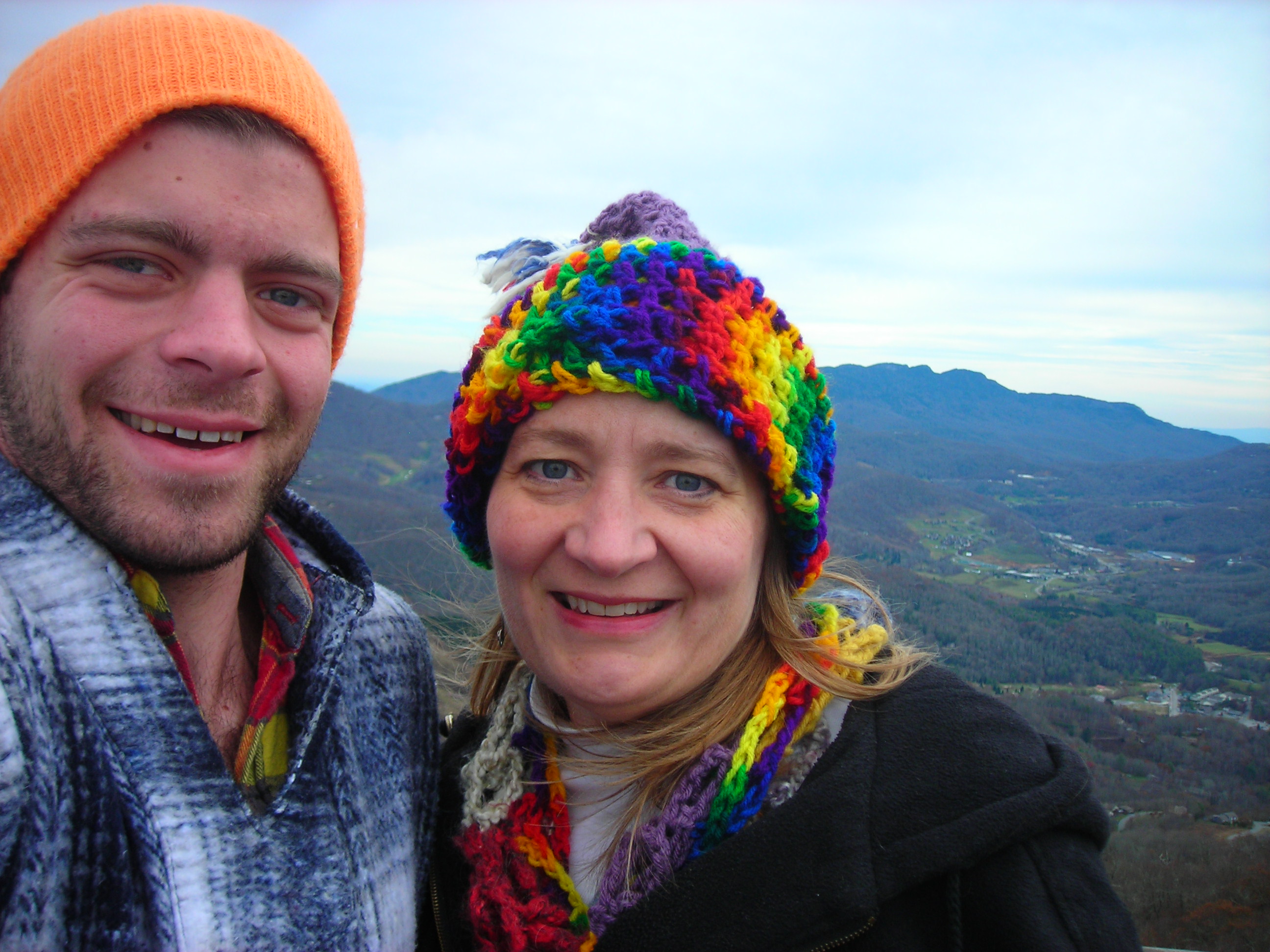
with my son atop Beech Mountain

with my son atop Beech Mountain

Every parent has goals for her child. We plan, we dream, we hope. We all know that each child is unique, and there are so many things that parents can’t control. Yet, we know that we provide the core environment. The earliest messages our child receives will stay with her in some form or another, for better, for worse.

I have two fantastic kids. One of my goals has been for them to treat each and every person in a respectful and egalitarian manner. I definitely want my kids to be feminists, and one child in particular received this message on a continual basis. And that child is my son – not my daughter. I always knew that my little white male child could do so very much to change the world for the better. Female feminists can only do so much unless male allies join with them to create systems, societies, and cultural values which treat women and men equally. I have always been thrilled when my son railed against injustice and inequality. As a young boy, he not only began to realize that not all moms were ministers, but his eyes were also opened to the fact that many faith communities would not allow women to be religious leaders at all. During summer employment, he has often had a female contemporary as his supervisor, yet has continually had to steer people to speak to his female supervisor when they assumed he was in charge due to his gender. I am so proud of the young male feminist in my household.

Intelligent young British actor, Emma Watson, was named a United Nations Women Goodwill Ambassador a few months ago, and addressed the UN a week ago concerning gender politics. She strongly claimed the word feminist, and initiated the #HeForShe campaign. She spoke eloquently about the need for men to claim feminism and to take action combatting inequality.

Since the speech, Watson has since joined a long-line of self-proclaimed feminists who have dealt with backlash. Nasty twitter comments, a threat of leaked personal photos, and even comments about her attire while addressing the UN (which was both professional and stylish) have emerged.

Cultural misogyny is rampant today. The media has finally begun to highlight the NFL’s lackadaisical treatment of its stars who assault and abuse women. Sexual assault on college campuses is finally receiving the attention it deserves. In areas of professional sports and frat boy culture which suggests women are only important as decorative ornaments or means for a man’s pleasure, it’s vital that real men stand up and speak out strongly against these assumptions. Women are created in the image of God. They should be treated with respect, dignity, and an open mind which never limits who they are called to be.

My teenage daughter asked me if I had seen Emma Watson’s speech. I responded in the affirmative, and we talked about the content for a while. I asked her, “Do you call yourself a feminist?” She gave me the look of incredulity that teenage girls own, and responded, “What else would I be?” I’m thrilled that both my kids – a young woman and a young man – would respond to that question in the same way.

God Loves a Woman’s Body

Durer’s renowned portrait of Eve

I’m not a big John Mayer fan, but I do think one of the best songs in the past decade (okay, it was actually 2001 – but close enough) is Your Body is a Wonderland. It celebrates a woman’s body – the awe, delight, and glory every woman should feel about her body. Yet, every time I get a whiff of pop culture, there is another “scandal” about a woman and her body. Is Beyonce photoshopped in a bikini? Is Meghan Trainor’s new song, All About that Bass, dissing people who are naturally thin? How can I look as good as that Hollywood star who is the same age as I am? (even if she has never given birth, has a personal trainer and chef and assistant and stylist, and enough money that she never lies awake at night wondering which bill she can afford to pay…)

The simple state of our society is that when women think of their bodies, they overwhelming have negative thoughts. They don’t celebrate this gift from God, but find things to criticize and to improve. And I fully claim that I am one of these women. I have tried my best to model for my daughter a healthy body perception – to keep my negative thoughts on the inside or just to voice them to my friends – but it’s an everyday challenge. As much damage as our society has done in contributing to a negative body image, I believe the issue started much earlier.

I remind myself on a continual basis that St. Augustine was not a totally bad guy. Yes, he had issues with his mommy – he kicked out his common law wife of over a decade and kept their son – and he tried his best to turn Pelagius into a heretic (and was successful). Yet, it’s his use of Greek dualism in his early 5th century writings that marked the Church (and thus Western society) for many centuries to come. Augustine took a few key verses from the Bible, mixed them with some of his Gnostic tendencies, and purported that the soul was connected with the divine, and could only reach God when denying or negating the body. The soul vs. body split became entrenched in Western thought. A woman’s body was especially seen as evil, since it was derived from the first sinner, Eve. Women’s bodies came to be viewed as a temptation, keeping men’s souls from attaining the glories of union with the divine. A woman’s soul could never overcome her body.

Pelagius (Augustine’s nemesis mentioned previously) was the first British theologian. He believed that all creation was good, including women’s bodies. Women were made in God’s image, as was man, and could be trusted to follow the divine light. Various theologians have tried to reclaim this goodness of creation in recent years. This is such a powerful message for women in today’s world. You are made in God’s image – no matter your size, skin color, age, etc. Your body is not a temptation for men – the temptation comes from them and how they view women. Your body is not something to be scrutinized and analyzed – it is a gift from God that works with our souls so that we can be God’s hands, feet, mouth, and heart in this world which so desperately needs it.

God loves each woman’s body. We should too.

Country Music, Women & God

I’m proud of my roots. I am a native of the North Carolina mountains and have many fond memories of my childhood. I particularly loved the only radio station we could always get – no matter what cove or valley we drove through – an AM station that played a lot of country, some rock n’roll, and even the occasional disco item. Country music in particular was the background noise of my childhood. Some of the songs were hysterical and cheesy – think “Convoy” – but many were always filled with a variety of life situations and a range of characters. There was also the standard fare – tough lives, drinking, rural living, and God.

In recent years, country music seems to be dominated by boys (and I use the word intentionally) who write about trucks, hot young women in tiny outfits, and drinking. “Bro- country” is the term that has been coined by music critics, and I am certainly not alone in my disdain for the one note that is filling the country airwaves. Young country phenom Kacey Musgraves famously spoke about this last summer when she said singing about trucks should be outlawed. The interesting thing about country music, and particularly bro-country, is that it still pays homage to the Christian faith, which is inconsistent with the themes of the preponderance of these songs.

My favorite country music song of late is “Girl in a Country Song” by Maddie & Tae. These two young newcomers provide great insight into the way women have by and large been relegated to sex objects in the world of country music today. Women in these songs are passive observers, simply there to be desired by the male protagonist. There are exceptions to this overbearing dominance in country music today – Miranda Lambert, Carrie Underwood, The Band Perry, Zach Brown Band, and a smattering of others. I’m by no means the first one to be irritated (to say the least) by this disturbing trend the past decade. However, one of the things I find most troubling is country music’s belief that it is intricately connected to Christianity. At the heart of Christianity is the belief that each and every person – no matter what gender, race, culture or orientation – is a child of God and should be treated with respect, honor and love. And how is that possible when women are seen only as objects, relegated to the lower status of “girls,” and celebrated for wearing skimpy outfits while putting up with bad-boys? Would any Christian parent (or any decent parent of whatever faith tradition) truly want their daughters to aspire to such things?

I certainly understand that a certain number of songs (in any genre) will be written about a physical attraction and desire, but when this is the overwhelming theme played on today’s country stations, there is a problem. Someone who truly purports to be of the Christian faith will recognize that each person (male and female) is created in God’s image, and is thus worthy of respect. Let’s hope Kacey Musgraves, Maddie & Tae, and others will continue to speak and be heard in their quest for better quality country music that truly reflects an egalitarian and respectful society, for people of whatever faith background.

Woman: A Child of God

The recent news of another mass shooting – this time at the University of California at Santa Barbara over the weekend – has filled the thoughts and hearts of many in recent days. Yet, the reasoning behind this event is a bit different than others in recent years. While it seems to be the norm for someone who resorts to such violence to feel bullied, isolated, and rejected by others, this individual focused his anger towards women. In various ways, he maintained that women wronged him because they refused to date him.

The vast majority of people in our society certainly realize this is an extreme situation. However, far too often, girls are told they are “lucky” if a boy likes them. They are told they should be grateful to be asked out on a date. If a girl refuses a date, she is labeled stuck-up or a bitch. A recent article by celebrity Rabbi Shmuley Boteach states that what women want more than anything to be is desired.

Seriously? Desired? He and I read the same scriptures, and apart from the Song of Solomon, that doesn’t seem to be a major defining characteristic of a woman being important in God’s kingdom. Miriam wanted to save her little brother Moses, and then help lead her people to freedom. Deborah wanted justice in the land, and used her brains to make it happen. In the New Testament (which as a Christian, I add to the Hebrew Scriptures for my tradition’s sacred writings), Mary wanted to praise God and rear and love her son Jesus. Mary Magdalene wanted to share Jesus’ message. Lydia wanted to build a strong church.

Former President Jimmy Carter published a new book this spring, A Call to Action: Women, Religion, Violence and Power. Though not a religious scholar, he does a solid job of exploring how religion has been used to perpetuate violence against women. The idea that women simply exist as a help-meet to the superior male, and that women only want to be desired by men, has led to untold actions of violence and oppression against women throughout the centuries. No matter our faith tradition, religion has been used to perpetuate these ideas.

It is time for both women and men in our society to proclaim that women are not simply objects revolving around the male sun of the universe. Both are made in the image of God, and God has great plans for each person – no matter their gender. I would hate to think my son expected that any girl he liked should be honored to date him. I would also hate to think my daughter felt her highest goal in life was to be desired by a man. Both of my wonderful children are so much more than their gender – they are so much more than who they might become with a good life partner one day. I pray that our society will expand its concepts of how men and women interact, and help create a culture where patriarchal ideology and violence are not tolerated.

My prayers go out to everyone connected with the shooting at UCSB. My prayers continue for women everywhere.

#YESALLWOMEN

Captain America: The Nature of Good and Evil

Image

My daughter and I are active participants in the Marvel Universe. We have seen all the movies, and even watched most episodes of ABC’s Agents of Shield. Captain America is perhaps our favorite of the superheroes, so we were anxious to see the new installment, Captain America: The Winter Soldier. The movie certainly did not disappoint.

Captain America (Steve Rogers) was a soldier with the Greatest Generation in the first movie. He felt certain he was battling evil, in the guise of Nazi Germany, during WWII. Rogers found himself frozen at the conclusion of a battle, only to be awoken 70 some years later in our current day. He spends the early part of this new movie struggling with the nature of good and evil. Is he working for the “good guys?” Is he really fighting evil? Does the end justify the means? Without spoiling the movie, let me state that these answers are never resolved, but it is refreshing to hear a hero struggle with those concerns, especially in a summer tent-pole action movie.

As Rogers discovers that Shield (the agency for whom he works) has the ability to spy on every single person on the globe, he is concerned that the actions evolve from fear, not freedom. Much has been written in theological circles since 9/11 about the culture of fear which now pervades society. Countless freedoms have been eradicated based upon fear from real or perceived threats.

Fear is intricately tied to an understanding of good and evil. When we place ourselves solely in the “good guys” camp, it is easy to demonize another person or group as evil, or “the bad guys.” As long as we are the good guys, then whatever we do is necessarily right, and conversely so for the bad guys. We can do no wrong, and some might even say that is the case because God is on our side. When we demonize another, we live in fear of that person. All our actions are based out fear, because we believe the other is evil.

My district superintendent (my boss, and an extension of the bishop in my judicatory) gave me some sage advice during my first appointment at a local church. I was in the midst of a situation rife with deceit and misinformation, some from very long term members of the church. He could not have been a better support, and gave me books to read about church conflict and about the nature of evil. Evil had always felt like a distant entity – Nazi Germany, for instance. Yet, sometimes it can encompass individuals. I am always very careful about naming something as evil – it is a very damning thing to do, and naturally places me in the position of God. Yet, Fred told me one thing I have never forgotten – When we battle evil, we have to be extremely cautious, because it can easily encompass us as well.

There is real evil in the world. Each person has the capacity to commit acts of great good or great evil – it depends upon being in the right or wrong circumstances. Living a life based upon fear much more easily allows that evil to encompass us, to guide our decisions. Captain America: The Winter Soldier powerfully illustrates that point. The movie ends with Rogers, still greatly conflicted about the nature of good and evil in this world, but certain about one thing. He remains convinced that there is good in the world, and that redemption is a real possibility. I look forward to seeing how he follows that belief in future installments.

Better Together/Be Blue Day

Image

People are wearing every shade of blue on college campuses across the nation today. Duke blue, Carolina blue, teal, aqua, and everything in between. Each year Interfaith Youth Core sponsors an annual day to take a stand against religious intolerance. Wearing blue means that one supports interfaith dialogue and shows respect for people of different faith traditions. Students are especially encouraged to find volunteer projects they can do together. Having a common goal – especially helping make the world a better place – is always a good way to build community.

College campuses are a perfect place to deepen one’s spiritual journey. Students are removed from the pressures of their homes, and can’t rely on being parasites of their parents’ faith. My mom once told me that the unexamined faith is not worth having. The independence of a collegiate setting provides the opportunity to delve more fully into one’s own faith – what do I believe, why do I believe it, how does this impact my life and the lives of others around me. The spiritual journey hits at the heart of all the existential questions in life.

So many people assume that interacting with someone of a different faith will harm or damage their beliefs. I don’t know how many times I have encountered first year college students whose home churches gave them the parting words, “Don’t let that school take away your faith!” The recent movie, God’s Not Dead, only encourages that mindset of fear. The movie tells the fictitious story of a college student whose professor makes his class disavow the existence of God or fail the class. One young man refuses to do this, and thus is given the alternate assignment of convincing his classmates that God is not dead. If he cannot achieve this, then he will fail. The well-meaning church members who fear for the faith of their young ones heading to college certainly supported this movie.

A protectionist, defensive mindset prevents people from developing a mature and real faith. A good college education encourages a young adult to think for herself, to develop her own ideas, to explore a variety of facets from multiple perspectives. College is not a place out to destroy one’s faith. It’s a place where one has the opportunity to create a deep faith that has true meaning, and will provide a spiritual foundation for all the ups and downs each life carries.

Encountering people of a different faith in a meaningful way does not harm one’s faith, but actually makes it stronger. I love seeing a student explain her faith to someone else. When she does, she understands it more fully. It becomes much more her own, instead of something she simply inherited from her family. It excites me to see students find commonalities across faith traditions. They realize we oftentimes have more in common than we realize with a surface or misinformed understanding of a different tradition. And it thrills me to see students band together to make the world a better place.

Our world is so incredibly divided today. This division oftentimes comes from ignorance and misinformation. Archbishop Desmond Tutu once stated that college students are at the forefront of any real change in our world. Thousands and thousands of students across our country are leading that change today. They are wearing blue, signifying to all around them that they are taking a stand against religious intolerance and will find ways to live authentically in community with people of different faiths.

Thanks be for leadership of college students!

“Loneliness is the great affliction of our age.”

“Loneliness is the great affliction of our age.” I was only half listening to the author being interviewed on NPR’s Morning Edition, but that one statement echoed throughout my small car. I repeated the phrase a couple times before asking my daughter to find a slip of paper and write down the sentence. I continued driving to church while Ava graciously recorded the statement. I listened more closely and soon discovered the author was Lawrence Osborne, promoting his new book The Ballad of a Small Player. I admittedly have not read anything by this British writer, but his insight spoke to me, especially as we were heading to weekly communal worship.

Humanity certainly has been afflicted throughout history. Sometimes it’s easy to spot the problems – violence, disease, fear, greed, discrimination, hatred. Each of these things is prevalent in the world today, but I believe Osborne is correct in his assessment. Loneliness is the greatest of all the ills facing our world today. The irony is that we are more exposed, more connected than ever before. Through the internet, and social media in particular, we oftentimes end up sharing far more of ourselves than is perhaps a good idea. We have hundreds of “friends,” place our every unfiltered thought on twitter, and post selfies of every size, shape and sensitivity multiple times a day. We create an interesting timeline of our lives, encouraging people to know how #blessed we are or sharing our outrage over poor customer service at the local store.

Yet, in the midst of this extreme lack of privacy, we are lonely. A recent study by the University of Chicago revealed that loneliness is dangerous for one’s health even, placing a person more at risk than poverty. During my years of working with college students, I know that isolation (real or perceived) is one of the biggest challenges. The teen and young adult suicide rate continues to increase. If one feels completely alone, the pain is often so great that death seems the only escape.

There are a number of reasons I attend church (and not just because I’m a minister). One of the primary reasons is for the community. God calls us to be in relationship, and we know God most clearly when we are connected with others. It is when two or three are gathered together that God is present. Even when we are not in the physical presence of another, knowing that we are connected with someone else in spirit holds a great power – a great power of grace.

Community doesn’t always need to be found in religious or spiritual organizations. That is obviously an easy place to combat loneliness and isolation, but we can create community with others in very powerful ways. Friends can oftentimes become closer than family. Our co-workers and neighbors can provide support and understanding in ways we can’t always imagine. To heal the great affliction of our age, we are called to connect with others. Social media is a great way to enhance relationships which are already present. It’s not a substitute for doing the deep face to face work required in friendships. Connection is not just about time – it’s also about quality. We must risk ourselves and that which is at the heart of who we are, so that others can truly know us and we can truly know them. That’s scary to do. Revealing ourselves is not always received as we would like, but when it is received with grace and love, it has the greatest power in the world.

More in the Season of Lent

Image

            Yesterday I heard a colleague spouting these words as she left a meeting, “No alcohol! No sweets!” Being on the tail-end of the conversation, I responded, “That sounds awful!” My immediate thought was her doctor had insisted on the restrictions. She quickly replied, “Oh, it’s Lent, you know.” I felt a tad bit chagrined. Being the only clergyperson around, I should have immediately known the reference.

             Lent is one of those odd times of the Christian year. Many people will “give up” or “sacrifice” something during those 40 days (minus Sundays) prior to Easter. These items often focus on food or luxuries. Alcohol, sweets, red meat, television, fast food – all these things are commonly associated with the season. Yet, why do we give up something? Is it a habit, just a thing to do? Is it a spiritual discipline? How do we hope to grow in our faith by sacrificing something we probably don’t really need anyway?

             When my kids were little, and I began to introduce the concept to them, I focused a great deal on what it means to have too much. In our society, we are almost obsessed with wanting more – more money, more free time, more possessions, more youth, more beauty, more success. And yet, so many of us have so much more than we truly need. (Now today’s thoughts are not directed towards the millions who are struggling to get by, who are dealing with food endangerment, and are on the edge of homelessness. It’s for the rest of us – the majority in this country.) I told my children that when we are so focused on wanting more, we have a really hard time focusing on Jesus and who he wants us to be. I explained that he lived his life in poverty, and wants us to help those who are struggling. When our lives are filled with excess, it’s really hard to do that. The whole camel through the eye of a needle thing.

             We give up things during Lent so that we have the heart, time, and space to focus on empowering those who don’t have more. We give up things during Lent so that we can identify, in some small manner, what it is like to do without. We give up things during Lent so we can walk in the path of Jesus.

             What am I giving up during Lent? Fast food. I have a real thing for fizzy Diet Cokes, and realized during the dark winter days how dependent I had become upon them. And I know many people in the world don’t have the extra few dollars to buy a soft drink from a fast food chain. Will I succeed in this endeavor? I surely hope so. I never maintained my promise during the years I gave up chocolate. (If the Girl Scouts wouldn’t deliver cookies during Lent, I would have had a better chance at success.) Regardless of success or not (after all, wanting “more success” will not enhance my spiritual journey), I pray that these days will create more space in my heart, soul, and mind so that I might see the needs around me, and might be filled with the Christ spirit to find ways to help meet those needs.

             I wish you all a fruitful Lent.